

DDR4 and DDR5 modules cannot stand in for one another — even the notch in the contacts differs — so the first thing to look at is what the board needs, and for laptops the shorter SO-DIMM form as well. Next comes the choice of frequency (3200 MT/s for DDR4, 5600–6400 MT/s for DDR5) and CL latency. A kit of two modules usually works faster than a single one of the same capacity, because dual-channel mode kicks in. Kingston FURY Beast, Goodram IRDM and HyperX turn up most often.
Find accessories for your phone
Select manufacturer and model
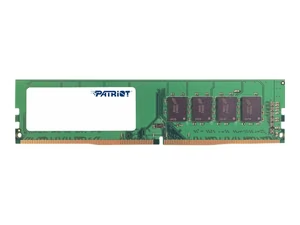
DDR4 and DDR5 modules cannot stand in for one another — even the notch in the contacts differs — so the first thing to look at is what the board needs, and for laptops the shorter SO-DIMM form as well. Next comes the choice of frequency (3200 MT/s for DDR4, 5600–6400 MT/s for DDR5) and CL latency. A kit of two modules usually works faster than a single one of the same capacity, because dual-channel mode kicks in. Kingston FURY Beast, Goodram IRDM and HyperX turn up most often.